
Summer Institute dates are set for 2026! Training will take place from July 13 to 17, 2026.
For more information and to start your application, please visit our Summer Institute page.
Summer Institute dates are set for 2026! Training will take place from July 13 to 17, 2026.
For more information and to start your application, please visit our Summer Institute page.
Registration Materials (Spring 2026)
SUPA Guides (2025-26)
Forms and Additional Information
Important Dates (Spring 2026)
| Registration Steps | Dates and Deadlines |
| Online Registration Opens | January 12, 2026 |
| Online Registration Closes & Tuition Assistance Application Deadline | March 2, 2026 |
| Tuition Payment Deadline | March 23, 2026 |
| Drop Deadline | April 10, 2026 |
| Withdrawal Deadline | May 8, 2026 |
| Official Syracuse University Grades Posted | June 18, 2026 |
Syracuse University Project Advance (SUPA) proudly celebrates Scott Rubins, longtime SUPA Forensic Science instructor at New Rochelle High School, who has been named the 2025 National High School Forensic Science Educator of the Year by the Consortium of Forensic Science Organizations (CFSO).
This prestigious national award honors Rubins for his innovation in teaching, dedication to student learning, and the powerful ways he connects forensic science with real-world experience.
For nearly three decades, Rubins has transformed forensic science education into something far beyond textbooks and lectures. His classroom functions like a professional crime lab—students process evidence, analyze mock crime scenes, and even take their findings to “court” in simulated trials. Each year, his Mock Crime Scene Final Exam, now in its 26th year, brings together more than 140 students in an immersive investigation and presentation experience.
“After 29 years of teaching forensic science—25 of those as a SUPA instructor—this feels like a meaningful recognition of everything I’ve worked toward professionally,” Rubins said. “On a personal level, it’s an incredible feeling. ‘Wow’ is the best way to describe it. I’m so grateful to SUPA for sharing this opportunity and for being such an important part of my journey.”
David Tate, Associate Director of Syracuse University Project Advance and Forensics Course Administrator, said Rubins exemplifies the best of what concurrent enrollment can achieve.
“Scott has been an outstanding partner in our mission to bring the rigor of college-level learning directly into high schools for more than twenty years,” Tate said. “What sets him apart is how he combines real-world forensic experience with exceptional teaching—his students don’t just learn about forensic science; they practice it. This award is a fitting recognition of his impact on students and on the field.”
Beyond the recognition, Rubins remains focused on what matters most: empowering students to see their own potential. Through his connections with professionals in forensic labs, law enforcement, and research, he’s introduced students to real-world cases, scientific papers, and experts who bring the field to life. Many of his former students have gone on to careers in forensic science and law enforcement, some even returning to mentor the next generation in his classroom.
Rubins credits his experience with Syracuse University Project Advance as a transformative influence on his teaching.
“Being part of SUPA has allowed me to move beyond the usual classroom limits,” he said. “It’s pushed me to challenge my students in ways I never thought possible and helped them realize they’re capable of more than they imagined. It has truly made me a better teacher.”
Dr. Christina Parish, Director of Syracuse University Project Advance, said Rubins’ achievement reflects both his individual excellence and the collaborative spirit at the heart of SUPA.
“This prestigious national award reflects the exceptional caliber of educators SUPA is privileged to partner with,” Parish said. “Scott’s teaching is a shining example of how our instructors’ creativity, expertise, and dedication impact students. His success also highlights the unique collaboration between our campus faculty and SUPA teachers, which allows us to offer authentic, college learning experiences in high schools across the country.”
Rubins’ recognition by the CFSO is a testament to his passion, creativity, and lasting impact as an educator. His dedication exemplifies the kind of excellence that makes SUPA’s network of instructors so extraordinary — professionals who bring real-world expertise, innovation, and care into their classrooms every day.
Article by Alex Haessig
When high school students are encouraged by educators to enroll in Syracuse University courses through Project Advance, the impact goes far beyond earning college credits—it can change lives. JC Alejaldre, now a professor at Columbia University’s School of Public Health and a leader in hospital operations at NewYork-Presbyterian, attributes much of his academic and professional journey to the SU courses (MAT 221-222) he took at Port Chester High School through Syracuse University Project Advance (SUPA).
JC recalled, “I took SU stats in high school. I was excited because statistics is foundational to any science curriculum—I knew I needed it. Having those credits let me start higher-level science classes sooner, which only deepened my love and passion for learning.”
For JC, the opportunity to take SU courses through Project Advance was especially significant. Raised by a single mother college seemed out of reach. “College was something that not only couldn’t I grasp, but couldn’t afford,” he said. “SUPA put into reality for me that I could do college level work and invigorated my mom and I to really think about college as a possibility”
JC said the benefits extended beyond the financial. SUPA gave JC the confidence to see himself as a college student. “It made college feel real for me. I could do college-level work while still in high school. It was empowering, as a 16-year-old, to realize, wow, I can do this.”
That confidence was especially vital when he faced discouragement. JC’s high school guidance counselor once said that college was impossible for him: “They looked at my mom’s taxes and told us we’d never afford college. But I already knew I could succeed, because I had already done college work.”
Earning SU credits also gave JC more flexibility in college. “In a strict pre-med curriculum, having statistics credits already gave me some breathing room. That extra space let me take electives earlier—and that’s how I discovered public health, which changed my career.”
Looking back, JC credits these SU courses taken through Project Advance as a turning point in his life: “It completely changed my high school experience and everything that followed. The earlier you step in, the greater the impact. That was certainly true for me.”
He urges educators to view SU courses as tools for empowerment. “College courses in high school can transform the way you see the subject—and yourself. That sense of growth made me believe I can do this. I’ve done it before, and I can do it again.”
For students like JC, SU courses are more than credits earned—they can change the course of a whole future.
Article by Sari Signorelli
Dear SUPA Partners,
We hope that you are all enjoying your summer break!
We recently wrapped up our SUPA Summer Institute workshops on the Syracuse University campus. Over 100 instructors joined us earlier this month to train with Syracuse University faculty in over 30 different course areas, including SUPA’s newest course pilots: Esports, Design Thinking, Digital Photography, and Applied Data Science.
SUPA welcomed teachers from partner schools from across New York state as well as neighboring New Jersey, Massachusetts, Connecticut, and Rhode Island. Attendees from SUPA’s California and international school partners had the distinction of traveling the farthest to participate in our Summer Institute. The latter included partner schools in China, South Korea, and SUPA’s very first partner school in India.
Teachers spent the week preparing to become Syracuse University adjunct instructors by familiarizing themselves with the university curriculum, course learning objectives, pedagogy, textbooks, assessment standards, student support resources, etc. and exchanging best practices with SU faculty and their workshop cohort.
As a special shout out, SUPA would like to recognize 18 new school partners with teachers participating in our 2025 Summer Institute:
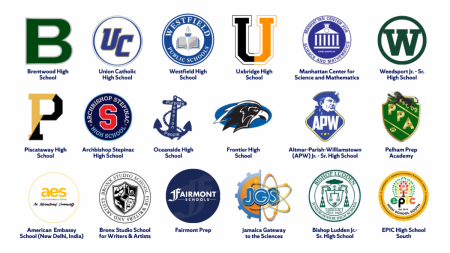
Our SUPA team of staff and faculty are looking forward to a rewarding 2025-2026 school year with our SUPA school partners and to hearing all about the inspirational instruction being provided by this talented group of educators and about the many achievements and successes of our SUPA students.